
The Library Suicides by Fflur Dafydd
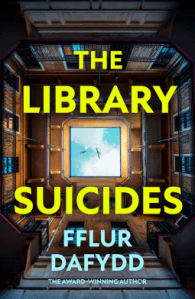
First, the cover blurb…
You can get in. But you can’t get out. Welcome to the library…
Twins Ana and Nan are lost after the death of their mother. Everyone knows who drove Elena, the renowned novelist, to suicide – her long-term literary critic, Eben. But the twins need proof if they’re going to get revenge.
Desperate to clear his name, Eben requests access to Elena’s diaries at the National Library where the twins work, and they see an opportunity. With careful planning, the twins lock down the labyrinthine building, trapping their colleagues, the public and most importantly Eben inside. But as a rogue security guard starts freeing hostages, the plan unravels. And what began as a single-minded act of revenge blooms into a complex unravelling of loyalties, motives and what it is that makes us who we are.
Hauntingly written, with a fresh, captivating voice, The Library Suicides is an intensely memorable and provocative literary read for fans of high concept thrillers that break the mould, and books about books and the concept of the written word.
***
Note: Since writing this review, I have come to understand that this novel was actually written some years ago but not published in English, so any similarities to the Covid-19 pandemic and various lockdown measures are coincidental but scarily precognisant.
Amongst the present slew of new novels written during lockdown periods, The Library Murders has to be one of the cleverest.
The location for this novel is never revealed in the story, although residents of a certain principality are going to have no trouble identifying it, and it’s not explicit but the ‘great sickness’ is surely an alternative name for the Covid-19 pandemic. It really is a clever satire, taking in the timid, some say over-the-top, lockdown restrictions placed by the regional government of this country, used in the story to effect all sorts of further restrictions and curtailments of enjoyment of the characters’ normal lives.
Constantly comparing their lives with the freedoms enjoyed in the ‘next-door country’, the characters are accepting the complete loss of physical books (banned because they’re unhygienic), the men are putting up with a revaluation of their very meaning (compulsory sperm donation for every man with no spouse).
At the centre of the literary life of this nation is the National Library – a hub of forward-thinking, technologically driven authoritarianism. The protagonists – the orphaned twins of a highly successful author – are struggling to make sense of their life without their single parent, and their focus on their jobs at the National Library begin to take a sinister turn when they determine to take revenge on their mother’s greatest critic.
The story takes place almost entirely within the library and, big building though it is, it feels quite claustrophobic, adding tension to the situation and compounding the despair of the library staff and users when they find themselves in the middle of a desperate situation.
The plot contains plenty of twists, and from midway I really had no idea where it was going. Some readers may find the ending ultimately unsatisfying, but it seems fitting for this dystopian world where the skewed views of politicians and a few academics go unchallenged by the frightened population and ‘normal’ free-thinking folk.
 Clued Up Editing